
Redefining the construction industry with innovative solutions, cuttin-edge technology and sustainable practices
Redefining the construction industry with innovative solutions, cuttin-edge technology and sustainable practices

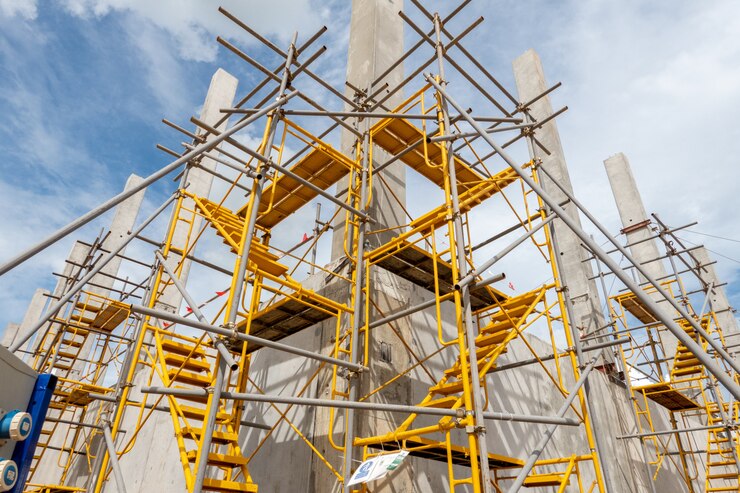
In every construction project, scaffolding plays a crucial role in ensuring safety, stability, and efficiency. It provides a temporary structure that supports workers and materials while performing tasks at various heights. Choosing the right scaffolding system is essential to maintain safety standards and improve project performance. Today, construction companies use different types of scaffolding systems depending on the project scale, design, and purpose. Let’s explore the most commonly used types of scaffolding in construction and their unique features.
Cuplock scaffolding is one of the most popular systems used in large-scale construction projects. Known for its versatility and quick installation, this system uses a unique locking mechanism with cups and blades that securely connect vertical and horizontal components.
It is ideal for both straight and curved structures such as bridges, tunnels, and commercial buildings. Cuplock scaffolding is highly durable, capable of withstanding heavy loads, and requires minimal maintenance. Many scaffolding manufacturers in Delhi and Gurgaon supply Cuplock systems for reliable and safe construction work.
Aluminium scaffolding is lightweight, easy to assemble, and corrosion-resistant, making it perfect for both indoor and outdoor applications. Unlike traditional steel scaffolds, aluminium ones are easy to transport and handle, reducing labor time significantly.
They are widely used for painting, maintenance, and electrical work, as well as by contractors who prefer quick installation and mobility. Aluminium scaffolding towers are also available on rent from many scaffolding rental companies, allowing builders to manage short-term projects cost-effectively.
Mobile scaffolding, also known as rolling scaffolding, is a flexible system equipped with wheels or casters at the base. This design allows workers to move the structure easily without dismantling it.
It is ideal for tasks that require frequent movement, such as plastering, painting, or electrical installations. The locking mechanisms on the wheels ensure stability during use. Mobile scaffolding improves efficiency and saves time, making it a preferred choice for small and medium-scale projects.
The standard scaffolding system, also known as tube and coupler scaffolding, is a traditional yet highly reliable structure. It consists of steel tubes connected by clamps or couplers to form a rigid framework.
Although this type takes longer to assemble than modular systems, it offers great flexibility in design and height. Standard scaffolding is often used in irregular-shaped buildings and restoration works. It remains a trusted choice for construction professionals who prioritize strength and adaptability.
Bridge scaffolding is a heavy-duty system designed for infrastructure projects such as flyovers, railway bridges, and highways. These structures must support heavy loads while ensuring safety and stability at elevated heights.
Bridge scaffolds are made using robust steel or aluminium materials and are often combined with walkway platforms for safe worker movement. For large civil engineering projects, bridge scaffolding offers durability and precise height adjustment, ensuring smooth operations in challenging environments.
Suspended scaffolding is commonly used for exterior building work such as window cleaning, façade repairs, or painting tall structures. It is supported by ropes or chains from the roof, allowing vertical movement with the help of pulleys or motors.
This type of scaffolding is ideal for high-rise projects where ground-based scaffolding is impractical. It provides excellent accessibility while minimizing material usage and installation time.
Understanding the different types of scaffolding systems helps contractors and builders choose the right structure for their project’s safety and efficiency. Whether it’s Cuplock scaffolding for large projects, aluminium scaffolding for mobility, or bridge scaffolding for infrastructure work, each system serves a specific purpose in construction.
When selecting scaffolding, always consider the project’s height, load capacity, and environment. Partnering with a trusted scaffolding company or scaffolding manufacturer ensures that you receive certified, durable, and well-maintained scaffolding solutions.

Raising Standards, Raising Structures. Top Aluminium Scaffolding Sale and Rental services across PAN India.
Copyright 2025 – All Rights Reserved By www.fatehscaffoldings.com